
3.4 Elements Common Across Standards
A designated metadata standard is implemented for each primary data type—microdata, indicators and databases, geographic datasets, documents, images, videos, audio, and scripts—to ensure the capture of the most pertinent information. In order to promote consistency and interoperability, all standards pertaining to development data incorporate a common set of fundamental metadata elements. In instances where these essential elements are missing from the international metadata standards adopted by the Bank, they have been incorporated by the Bank into its standards. These additions pertain to metadata provenance, tags, and version control.
3.4.1 Information on Standard Used
Metadata files (JSON or XML) produced by the Bank for development data are required to include a header section specifying the metadata standard and its version. This practice enables automated systems to accurately parse, validate, and process the metadata. A clearly defined header enhances usability, consistency, and interoperability of metadata. By explicitly indicating the standard, the header enables systems to:
Interpret structure and semantics: Machines can reliably understand metadata elements, their relationships, and the expected data types in accordance with the defined standard.
Ensure compatibility and interoperability: Knowledge of the standard and version facilitates seamless integration with other platforms and tools adhering to the same standards.
Enable automated processing and validation: Systems can assess compliance with the specified standard, confirming that metadata adheres to prescribed formats and rules.
Facilitate version control and updates: Explicit versioning in the header allows for smooth transitions when metadata standards evolve, preventing compatibility issues and ensuring metadata integrity over time.
3.4.2 Unique Dataset Identifiers
Every data resource—be it a micro-dataset, an indicator, a geographic dataset, or another type—needs a persistent and unique identifier to set it apart from others. All metadata standards include a mandatory element, idno, used to capture the unique internal identifier for each documented resource. This is vital both for accurately cataloguing datasets within the Bank’s repositories and for allowing users to cite them properly.
Beyond the idno identifier, the Bank’s metadata standards allow for capturing various other identifiers, such as Digital Object Identifiers (DOIs) and original identifiers from external sources. Keeping these original identifiers helps maintain data traceability and verify its origins.
3.4.3 Version Statement for the Data
Datasets are subject to periodic updates or revisions, making effective data versioning essential. [1] All metadata standards implemented by the Bank contain components to record the dataset version (Figure 5).
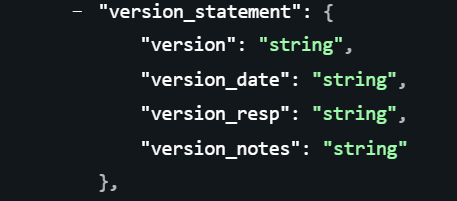
Figure 5 - Versioning data
Semantic versioning is recommended for datasets to clearly communicate changes. It uses a three-part format: MAJOR.MINOR.PATCH (e.g., 1.4.2).
MAJOR: Indicates breaking changes that are incompatible with previous versions. For datasets, this may involve:
Significant changes to the data file structure (e.g., new variables added, variable names changed, or format alterations).
Removal of key data elements.
A shift in methodology or classification that affects continuity.
MINOR: Denotes backward-compatible enhancements, such as:
Adding new rows, columns, variables, or fields that do not disrupt existing workflows.
Extending the dataset with new metadata.
Incorporating data for additional periods or geographies.
PATCH: Reflects backward-compatible fixes, including:
Corrections to data errors (e.g., fixing typos or recalculating values).
Minor updates to metadata that clarify existing information without altering its meaning.
Workflow example:
Initial release: A dataset released as 1.0.0 signifies the first stable version.
Patch updates: A typo is fixed in some records without changing the structure. The version becomes 1.0.1.
Minor updates: A new variable (or column) is added to the dataset. The version updates to 1.1.0.
Major update: The dataset's structure is redesigned, and some variables are removed. The version updates to 2.0.0.
The benefits of semantic versioning are:
Clarity: Users can easily understand the scope of changes.
Predictability: Clear guidelines ensure consistent communication with dataset users.
Compatibility management: Data users can evaluate whether their workflows require adaptation based on the change of the version.
When applying semantic versioning, it is recommended to provide thorough documentation for all updates. This process should involve explicitly stating the version number in the dataset's metadata (version), recording the version date in ISO 8601 format (version_date), and maintaining an exhaustive version history within the documentation (version_notes). The version notes ought to present a detailed summary of each change, specifying both the date and a description of the modifications made.
3.4.4 Metadata Information and Version Statement
It is essential to document both the version of the data and the associated metadata. All metadata standards utilized by the Bank include a designated section for recording details of metadata elements. For instance, the DDI Codebook standard labels this section as "document description," whereas other standards may refer to it as "metadata information" (Figure 6). Additionally, the implementation of semantic versioning for metadata is strongly recommended.
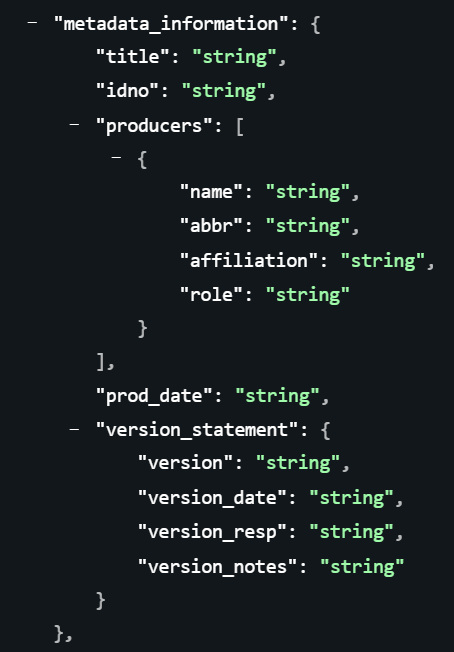
Figure 6 - Metadata on metadata in a Bank metadata standard
3.4.5 DataCite Elements
All metadata standards implemented by the Bank include a datacite section (Figure 7). This section contains metadata elements necessary for the automated generation of Digital Object Identifiers (DOIs) using DataCite.[2] DataCite, a DOI and metadata management service to which the Bank subscribes, facilitates the registration and management of DOIs for its datasets. The Development Data Group within the Bank oversees this service. Through DataCite, the Bank assigns DOIs to its data products, maintains accurate metadata in accordance with FAIR principles, and ensures persistent links for long-term accessibility and citation.[3] Additionally, DataCite provides an API that enables programmatic DOI creation, thereby increasing the flexibility and scalability of DOI management within the Bank*’s data* workflows. The datacite metadata elements are structured for compatibility with this API.
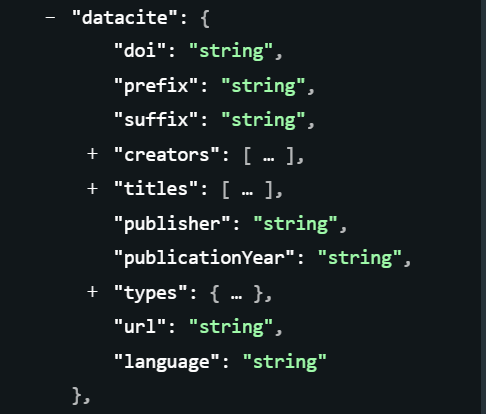
Figure 7 - Metadata elements for DataCite (for creation of DOIs)
3.4.6 Provenance of the Data Resource
All metadata standards incorporate a provenance section (Figure 8), which serves to document the source of both the data and its associated metadata, especially when collected programmatically from external platforms. The elements within this section are designed to provide transparency and enhance the traceability of the data's lineage.
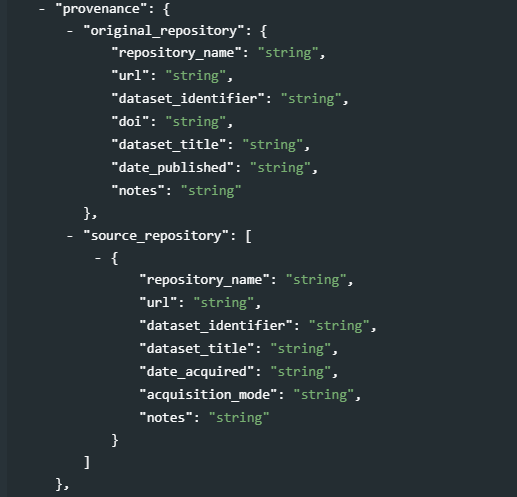
Figure 8 - Metadata on data and metadata provenance
3.4.7 Tags
All metadata standards include a "tags" section (see Figure 9). Tags are user-defined textual elements that may be grouped to support functions such as facilitating filters within data catalogs.
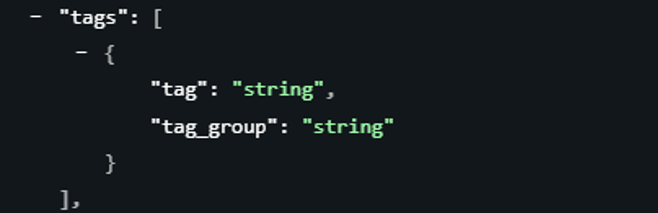
Figure 9 - Tags and tag groups
For instance, a data catalog may encompass both open-access resources and those that require payment. To facilitate user navigation, the catalog interface should provide a filter (facet) enabling users to select datasets according to their pricing model (see Figure 10). Although the Bank’s metadata standards presently lack a dedicated element for indicating resource cost status, this information can be efficiently documented through a user-defined tag group, such as “pricing,” utilizing tags like "Free" or "For a Fee."
Employing controlled vocabularies for tags and tag groups is often beneficial, as it ensures consistency, reduces ambiguity, and improves searchability across the catalog. These structured tags can then be leveraged to create intuitive facets in the data catalog, enhancing the user experience and supporting more precise data discovery.
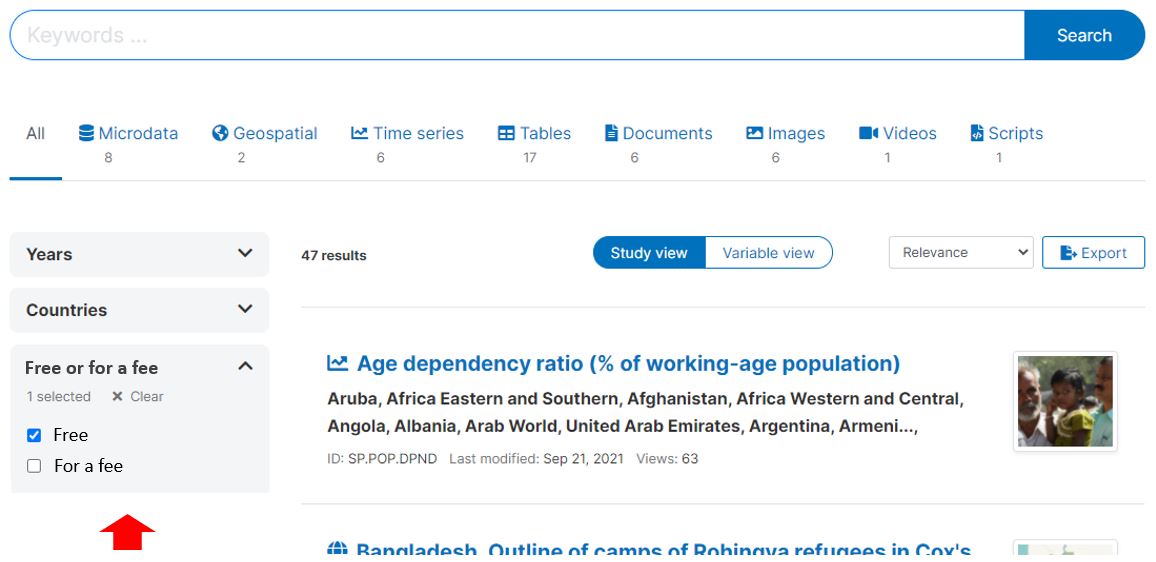
Figure 10 - Use of tags and tag groups for faceting in a data catalog