
2.8 Metadata Governance
2.8.1 Information on Metadata
Metadata must consistently correspond with the associated dataset; any modifications to the data should be promptly reflected in the metadata to ensure ongoing accuracy and consistency. Consequently, it is common practice to maintain multiple versions of metadata.
The metadata standards used by the Bank for documenting development data include a dedicated section for documenting metadata itself (Figure 3). This section is labeled "Document Description" in the DDI Codebook metadata standard and as "Metadata Information" in other metadata standards. It contains key elements to describe metadata versions, such as an identifier, details of the metadata producer(s), production date, and a version statement. The version statement should include both a version description and date, ideally stored in ISO 8601 format (YYYY-MM-DD HH:MM:SS.sss). It is recommended to include a note in the version statement to describe changes compared to previous iterations.
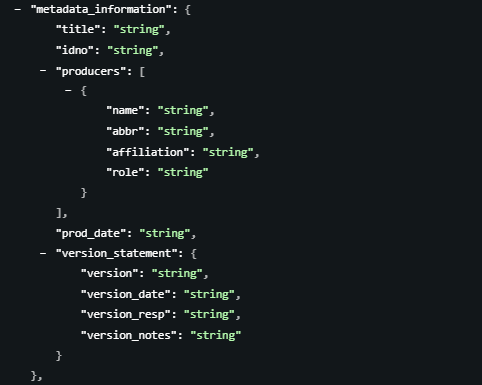
Figure 3 - Metadata information and versioning
2.8.2 Recording the Provenance of Metadata for Traceability
Metadata may be generated within the Bank or obtained from external sources, such as metadata catalogs managed by other organizations. When using external metadata, it is important to document provenance details for traceability and transparency. The Bank’s metadata standards feature a specific provenance section intended to record both the source of imported metadata and its original repository.
2.8.3 Locking and Versioning Metadata
The Bank’s metadata editor incorporates a versioning mechanism that enables users with reviewer privileges to lock project-specific metadata. Upon review and endorsement, locking renders the metadata read-only, thereby safeguarding it against unauthorized modifications.
When metadata is locked:
The system assigns a version number consistent with semantic versioning (distinguishing major, minor, or patch updates).
The reviewer supplies a concise summary of significant changes introduced in the new release (applicable to versions subsequent to 1.0.0).
The system logs both the reviewer’s credentials and the timestamp associated with the lock action.
Subsequent to locking, the metadata editor automatically generates a new editable project copy, which allows continued enhancements while preserving the integrity of the locked version. All version information is documented within the version_statement section of the metadata, and the editor maintains and displays a comprehensive version history, ensuring transparency and accountability.
To guarantee metadata integrity, the editor generates a checksum—a unique string calculated using a cryptographic hash algorithm. Checksums provide:
Integrity assurance – Any inadvertent alterations or corruption (e.g., from storage or transmission errors) result in a changed checksum, promptly identifying unauthorized changes.
Automated monitoring – Even minimal updates generate a distinct checksum, facilitating automatic comparison without the need for manual intervention.
Workflow automation – Checksums support critical downstream operations in the Bank’s data management and dissemination frameworks by:
Flagging metadata modifications.
Enabling reversion to earlier versions should inconsistencies arise.
Synchronizing metadata repositories efficiently.
This approach ensures that metadata versioning remains comprehensive, transparent, and auditable, effectively supporting internal governance requirements and operational processes.